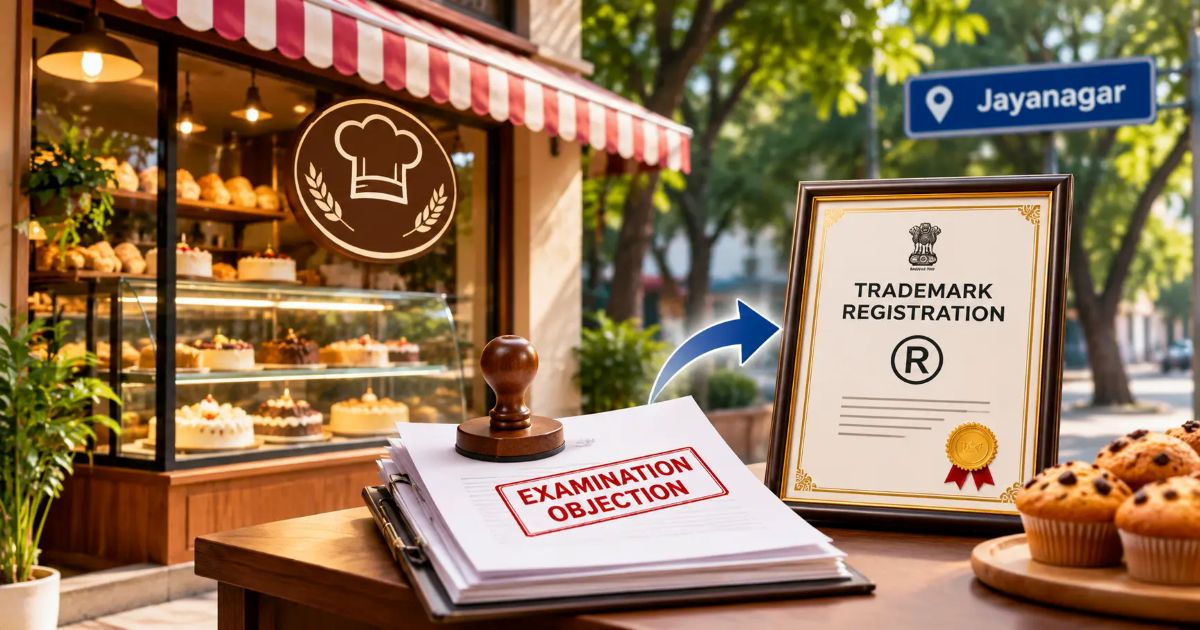
How a Jayanagar Bakery Chain Secured Its Trademark After an Examination Objection
Jayanagar bakery’s trademark objection: why examiners object, how to file a reply, and how to track it to registration in India.
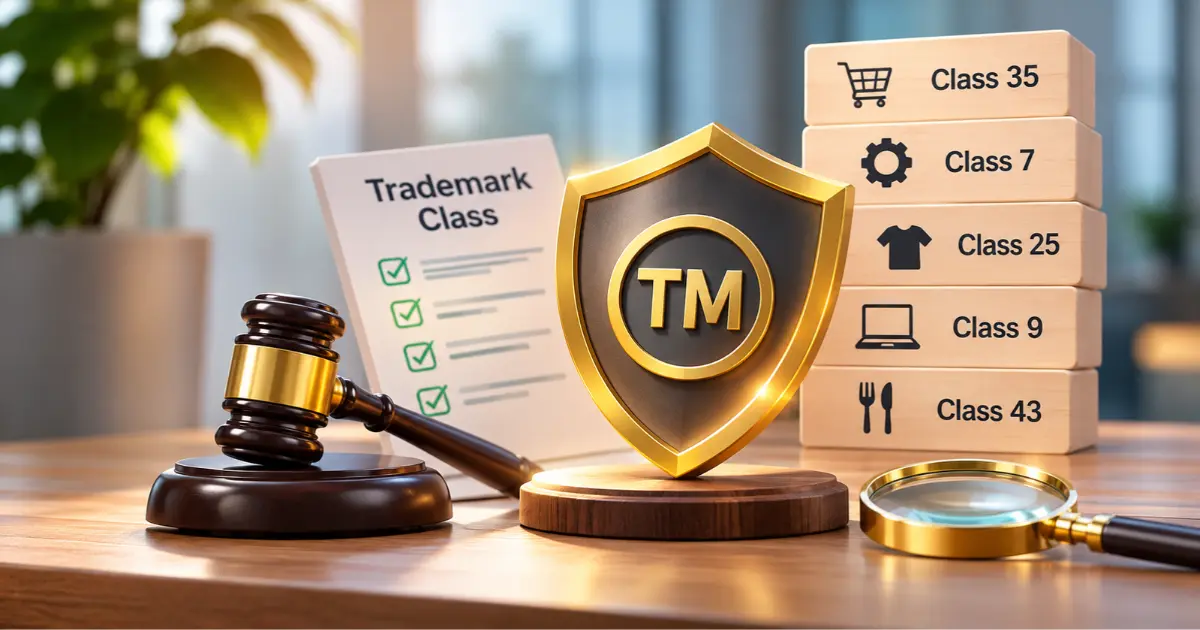
You have a business name, a logo you love, and a plan to protect them. Then you open the trademark application and hit a field asking for the “class” of goods or services. Many founders pick whatever looks closest and move on. It looks like a small decision, but it decides what your trademark actually protects.
Registering a trademark in the wrong class can leave your brand exposed in the very market where you operate. Getting it right at the start is cheaper and easier than fixing it later. This guide explains how trademark classification works in India, what each class covers, and how to choose the right one. For the full filing journey, our guide on trademark registration in Bangalore, search, filing, and registration, covers the steps after class selection.
A trademark is not registered “in general”. It is registered for specific goods or services. To organise millions of products and services, India follows the Nice Classification, an international system administered by the World Intellectual Property Organization (WIPO) and used by most countries, including India.
The system has 45 classes:
Every product or service falls into a class, and every application filed under the Trade Marks Act, 1999 must name at least one. Your protection extends to the goods or services you list in that class, plus closely related ones.
The classification is the foundation of the Trade Marks Registry’s examination. It determines which earlier marks your application is compared against and where the Registry looks for conflicts.
It defines the scope of your protection
If you register a clothing brand in Class 25 only, you are protected for clothing, footwear and headgear. That registration does not automatically cover a café you open under the same name, or an online store you launch later.
It affects whether your application is objected to or opposed
The Registry and third parties check whether similar marks already exist in the same or related classes. A mark that is free in one class may be blocked in another. Choosing the right class helps you avoid avoidable conflicts and helps your application hold up.
It determines your cost
Government fees are charged per class. For e-filing, the fee is ₹4,500 per class for individuals, startups and small enterprises, and ₹9,000 per class for companies, LLPs and other applicants. A mark filed in three classes costs three times the single-class fee. Fees are not refundable if the application is later objected to, opposed or abandoned, so a wrong class is a wasted expense. You can confirm the latest fee schedule on the IP India website before you file.
It is difficult to change later
You can narrow the list of goods or services within a class after filing, but you cannot simply swap in a different class or widen the scope. If you chose wrongly, the usual remedy is a fresh application, with new fees and a new timeline.
You do not need to memorise all 45 classes, but you should know the ones most businesses use.
The official class headings and the detailed lists of goods and services are available on WIPO’s Nice Classification site, which is worth checking before you file.
Step 1: List exactly what you sell or provide today
Write down every product and service your business offers. Be specific. “Technology business” is not enough. Is it an app you sell (Class 9), a software platform customers log into (Class 42), or consulting for clients (Class 35 or 42)? The more precisely you describe your offering, the more precisely you can classify it.
Step 2: Add what you plan to offer in the next few years
Trademark protection is most valuable when it keeps pace with your growth. If a bakery plans to sell packaged snacks and run a café, you should think about Class 30 for the products and Class 43 for the café. You do not have to cover every possible future idea, but cover what is realistically coming.
Step 3: Separate goods from services
A common point of confusion is the difference between a product and the service of selling it. A clothing brand that manufactures and sells its own designs needs Class 25 for the clothing. If it also runs an online store selling other brands’ products, it may also need Class 35 for retail services. Think about what you are actually selling and what the customer is actually buying.
Step 4: Look up the official class descriptions
Use the Nice Classification list, or the goods and services search on the Trade Marks Registry portal, to find the closest match. Identify the class and the specific descriptions that suit your business. The e-filing portal also lets you choose from a pre-approved list of terms, which helps your application go through smoothly.
Step 5: Search the register in those classes
Before you finalise anything, run a trademark search to see who already holds similar marks in the classes you picked. The Registry offers a public trademark search facility. A mark that looks clear in one class may be taken in a related one, which can change your filing strategy. A professional search is more reliable than a quick online check, because it also covers phonetic and visual similarities.
Step 6: Decide on the number of classes
You can file a single application covering multiple classes, and the fee is charged per class. Decide your core class first, then add related classes where the cost is justified by the real risk of someone else using your mark.
|
Business type |
Primary class(es) |
Notes |
|
Clothing or fashion label |
Class 25 |
Add Class 35 if you run an online store for multiple brands |
|
Restaurant or café |
Class 43 |
Add Class 30 or 29 if you sell packaged food under the brand |
|
Mobile app (sold as a product) |
Class 9 |
Covers downloadable software |
|
SaaS or web platform |
Class 42 |
Covers software hosted online for customers |
|
IT consulting firm |
Class 42 and Class 35 |
Depends on the nature of your services |
|
Cosmetics and skincare |
Class 3 |
Add Class 5 if medicinal claims are involved |
|
Coaching or edtech |
Class 41 |
Add Class 9 or 42 for apps and platforms |
|
Ecommerce marketplace |
Class 35 |
Retail and online store services fall here |
|
Packaged foods |
Class 29 or 30 |
Pick by product type; consider both if you sell across categories |
|
Real estate firm |
Class 36 |
Add Class 37 if you also construct |
Treat this table as a starting point, not a final answer. Your business model decides the real classification.
The question many founders ask is whether they can save money by filing in just one class. The answer depends on risk and budget.
File in one class when:
File in multiple classes when:
A sensible middle path is to protect your core class first and add others as the business grows. Remember, though, that a mark can be taken by someone else in the meantime, so do not delay the classes that matter most.
Mistake 1: Choosing a class that is “close enough”
Approximate classification is the most frequent cause of weak protection. A brand registered in Class 35 (retail) does not protect the products themselves. Use the class that matches what you actually provide.
Mistake 2: Describing goods or services too broadly or too vaguely
Overly broad descriptions can draw objections and may be difficult to defend. Vague wording can also leave gaps in your cover. Use clear, specific descriptions from the official lists.
Mistake 3: Ignoring related classes
Your brand may be safe in Class 25 but exposed in Class 35 if someone opens an online store under a similar name. Consider where a copycat could realistically hurt you.
Mistake 4: Skipping the search
Filing without a search risks objections, oppositions and lost fees. Searching the relevant classes first gives you a realistic picture of your chances.
Mistake 5: Filing under the wrong applicant category
Applicant type affects your fee. Individuals, startups recognised by DPIIT, and small enterprises pay the lower fee, while companies and others pay the higher rate. If you are still deciding on your business structure, see our services for company registration, LLP registration and proprietorship, because the applicant’s legal form shapes who owns the mark and what you pay.
Mistake 6: Assuming one registration covers every business
If you run separate lines of business, such as a restaurant and a packaged food brand, a single class will not cover both. Match your classes to your business lines.
Once you file, the application goes through the usual stages:
Registration is valid for ten years and can be renewed for further ten-year periods. During this process, a mismatched class or description is exactly the kind of issue that triggers objections, which is why careful classification at the start saves time later. For ongoing business compliance alongside your brand protection, our team also handles GST filing and registration and ROC filings.
The Nice Classification looks simple until you apply it to a real business. A hybrid model, such as a brand that sells a physical product, runs a subscription app, and offers training, can reach across four or five classes. Experienced professionals can:
The cost of professional help is small compared with the cost of losing a brand you have spent years building. Our Trade Mark Registration service covers class selection, search, filing and follow-up from start to finish.
How many trademark classes are there in India?
There are 45 classes: 34 for goods and 11 for services, following the Nice Classification.
Can I register one trademark in more than one class?
Yes. You can file one application covering several classes, paying the fee for each class.
Can I change my trademark class after filing?
Generally no. You cannot add a new class to a filed application. You would need to file a fresh application, so choose carefully from the start.
Is a trademark in one class valid for other classes?
No. Protection is tied to the registered class, though similar goods and services in related classes can also be affected by conflicts.
What if my business fits two classes?
File in both if both reflect what you actually offer, or plan to offer soon.
Can I do it myself?
You can file on your own through the portal, but mistakes in class selection and descriptions are hard to correct. Professional guidance improves the chances of smooth registration.
Choosing the right trademark class is not paperwork. It is a business decision that decides where your brand is safe and where it is exposed. Take the time to list your goods and services, check the class descriptions, search the register, and file for the classes that match your real business. For more practical guides on registration, tax, and compliance, browse the MAM Biz Solutions blog.
Not sure which trademark class fits your business? The team at MAM Biz Solutions can map your products and services to the right classes, run a trademark search, and handle your filing from start to finish. Contact us today for a free consultation, or call +91 91080 52995, and protect your brand the right way.
Jayanagar bakery’s trademark objection: why examiners object, how to file a reply, and how to track it to registration in India.
A practical guide to trademark registration in Bangalore covering search, TM-A filing, legal requirements, examination, opposition and renewal for businesses.
Spending on branding before securing your name is a risk. Here is why filing early matters.